

By Srimani KN, Director of Saccon Lines India Pvt Ltd
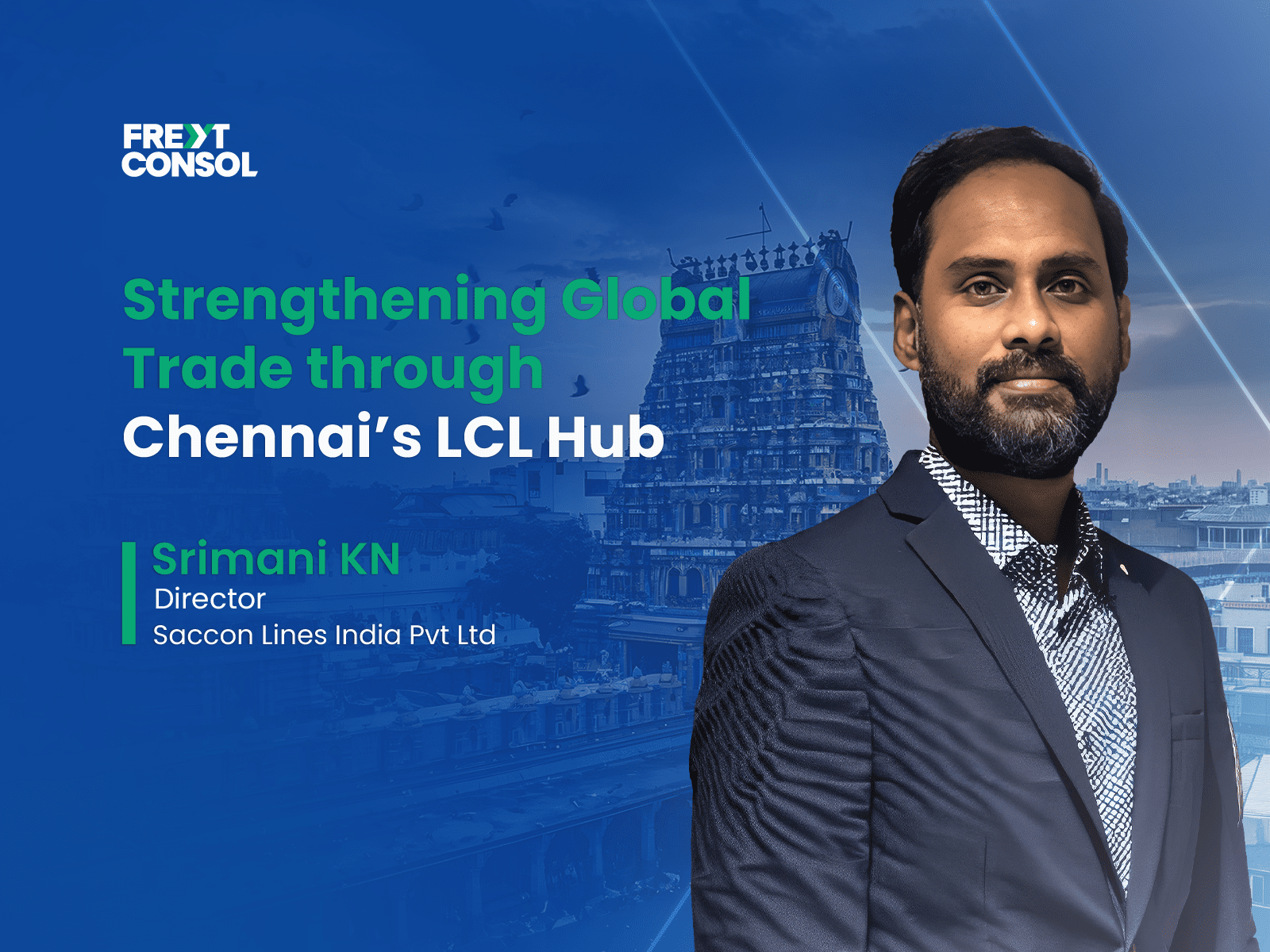
As we navigate through 2026, India has emerged as a central pillar in the "China Plus One" strategy, with Chennai serving as the critical gateway for the nation’s industrial exports. For businesses looking to tap into this growth, the efficiency of Less-than-Container Load (LCL) consolidation has become the ultimate competitive advantage.
At Saccon Lines India Pvt Ltd, we have witnessed this transformation firsthand. From our base in Chennai, we see the convergence of massive infrastructure projects, digital reforms, and a surge in manufacturing. However, moving goods in a volatile market requires more than just space on a ship; it requires the foresight of an experienced partner who understands the nuances of the Indian landscape.
The Strategic Importance of Chennai in 2026
Chennai is no longer just a regional port city; it is a global maritime powerhouse. In the 2024-25 fiscal year, the combined cargo throughput of Chennai and Kamarajar ports crossed the 100 million-tonne milestone, signaling a new era of capacity. With the first phase of the Multimodal Logistics Park (MMLP) at Mappedu becoming operational in early 2026, the region has effectively eliminated the traditional "last-mile" bottlenecks that once plagued southern Indian exports.
“The growth we are seeing in Chennai is not accidental. It is the result of years of structural reform and a deep commitment to making India a reliable link in the global supply chain,” says Srimani. “By integrating road, rail, and sea through the Mappedu hub, we are offering shippers a level of predictability that was previously unimaginable.”
For LCL shippers, this means faster turnaround times. The deployment of Enterprise Business Solutions across Chennai Port operations has digitized workflows, reducing transaction friction and ensuring that consolidated cargo moves through the terminal with precision.
Why LCL is the Backbone of India’s Export Surge
As India’s exports aim for the $1 trillion mark by 2030, the profile of the Indian exporter is changing. We are seeing a massive rise in MSMEs (Micro, Small, and Medium Enterprises) and e-commerce players who require high-frequency, smaller-volume shipments rather than massive FCL (Full Container Load) movements.
LCL consolidation is the perfect fit for this "Just-in-Time" inventory model. It allows businesses to maintain a steady flow of goods without the capital-intensive requirement of filling an entire 40-foot container.
“In today’s economy, flexibility is the currency of success. LCL allows our partners to pay only for the volume they use, which is vital for maintaining healthy cash flows in a high-interest environment,” Srimani explains. “We don’t just move boxes; we manage the rhythm of our customers' businesses.”
Navigating the National Logistics Policy (NLP)
One of the most significant drivers of our efficiency at Saccon Lines is the National Logistics Policy. By streamlining the digital backbone through the Unified Logistics Interface Platform (ULIP), the Indian government has provided forwarders like us with real-time visibility across 30+ different systems.
For our clients, this translates to:
- 1. Reduced Logistics Costs: Targeted to reach single digits of GDP.
- 2. Faster Documentation: Digital signatures and automated customs filing.
- 3. Enhanced Security: Saccon Lines is proud to be an AEO (Authorized Economic Operator) certified partner, ensuring our shipments are treated with the highest priority and trust by customs authorities.
“Being AEO certified is a testament to our commitment to global security and compliance,” notes Srimani. “It allows us to pass on the benefits of faster clearances and reduced inspections to our Freyt Consol partners worldwide.”
Sustainability and the Green Port Initiative
The maritime industry is facing increasing pressure to decarbonize, and Chennai is leading the charge in India. The shift from diesel-powered equipment to electric machinery at the port and the induction of green tugs are aligning Chennai with global ESG (Environmental, Social, and Governance) standards.
LCL consolidation inherently supports these goals. By maximizing container utilization and reducing the number of partially filled containers at sea, we are helping our clients reduce their carbon footprint per unit of freight.
“Sustainability is no longer a 'nice-to-have', it is a regulatory and moral imperative. Our role as consolidators is to find the most carbon-efficient routes and methods to move cargo,” Srimani asserts.
The Saccon Lines Advantage: 60 Years of Expertise
While technology and infrastructure provide the tools, it is the "human element" that ensures a shipment reaches its destination against all odds. Saccon Lines was built on a foundation of nearly 60 years of combined experience. Having started as sales trainees in the early 2000s, our leadership team understands every cog in the logistics machine.
From handling complex automotive components, a major export for the "Detroit of Asia" (Chennai), to managing delicate agricultural products, our expertise is deep-rooted.
“We believe that no one ever ascended a mountain without risk, but in logistics, our job is to mitigate that risk for our clients,” says Srimani. “Whether it’s navigating geopolitical shifts or managing peak season congestion, we stand as the steady hand for our partners.”
Looking Ahead to 2027 and Beyond
As we look toward the future, the integration of AI in route planning and the expansion of the "India-Middle East-Europe Economic Corridor" (IMEEEC) will further cement Chennai’s status. Saccon Lines India Pvt Ltd remains committed to being the premier LCL partner in this region, leveraging our Freyt Consol network to provide seamless end-to-end solutions.
For businesses looking to navigate the complexities of the Indian market, the message is clear: the opportunities are vast, but the right local partner is essential.
“Our vision is to realize the dreams of our customers by providing a logistics experience that is as seamless as it is secure,” Srimani concludes. “In Chennai, the gates are open, and Saccon Lines is here to lead the way.”ers in this industry. At Transco, we are ready to lead that charge from Colombo,” concludes Sachin.
Article written by
Freyt Consol is a global network for LCL consolidators and NVOCCs dedicated to excellence and long-term growth. We create an environment where members thrive by collaborating with trusted partners and accessing essential resources.
Read more Freyt Consol Blogs ⇲
- Strengthening Global Trade through Chennai’s LCL Hub
 Chennai is emerging as a premier hub for LCL consolidation, driving India’s export growth through advanced infrastructure and digital innovation. With strategic reforms, multimodal connectivity, and sustainability initiatives, the city is redefining efficiency in global logistics. Srimani of Saccon Lines India Pvt Ltd shares expert insights on how Chennai’s capabilities are enabling seamless trade and supporting the evolving needs of international freight forwarders.
 - CSS Saudi Arabia: Reliable Direct LCL Services to Jeddah & Dammam Remain Fully Operational
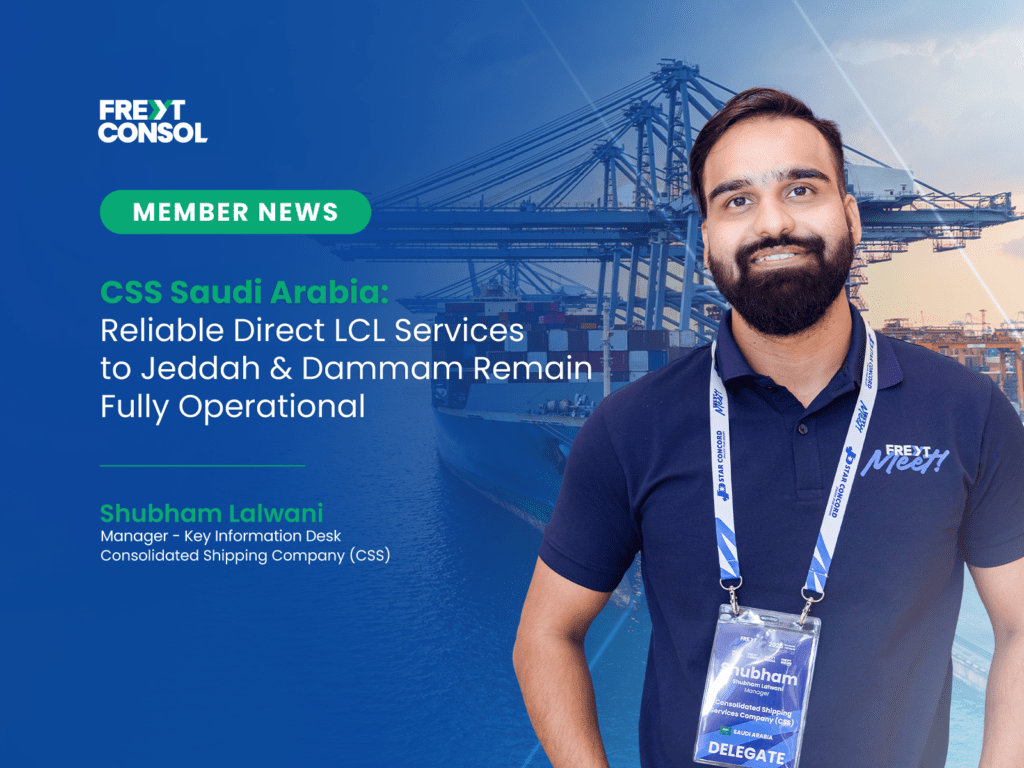 CSS Saudi Arabia has reaffirmed that its direct LCL services to Jeddah and Dammam remain fully operational, with stable schedules from Europe, China, and India. For freight forwarders moving cargo into the Kingdom, this provides a consistent consolidation option amid shifting regional transit conditions. The service offers direct routing, reduced handling, and reliable connectivity into key Saudi gateways.
 - Sri Lanka as the Premier Hub for South Asian LCL
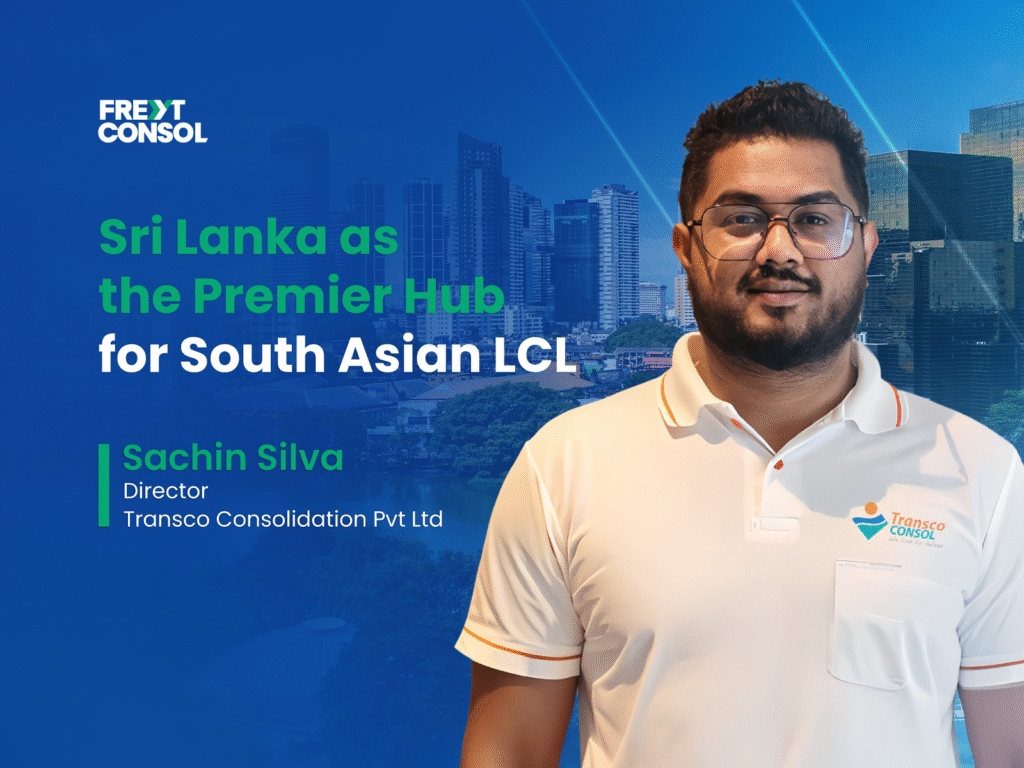 Sri Lanka has cemented its position as the premier hub for South Asian LCL consolidation, with Colombo at the center of regional connectivity. Record container volumes, expanded terminal capacity, and full digital customs integration are strengthening its role as a relay gateway for the Indian Subcontinent. For forwarders moving East–West cargo, Colombo now offers the frequency, speed, and precision LCL operations demand.