

By Sachin Silva, Director at Transco Consolidation Pvt Ltd
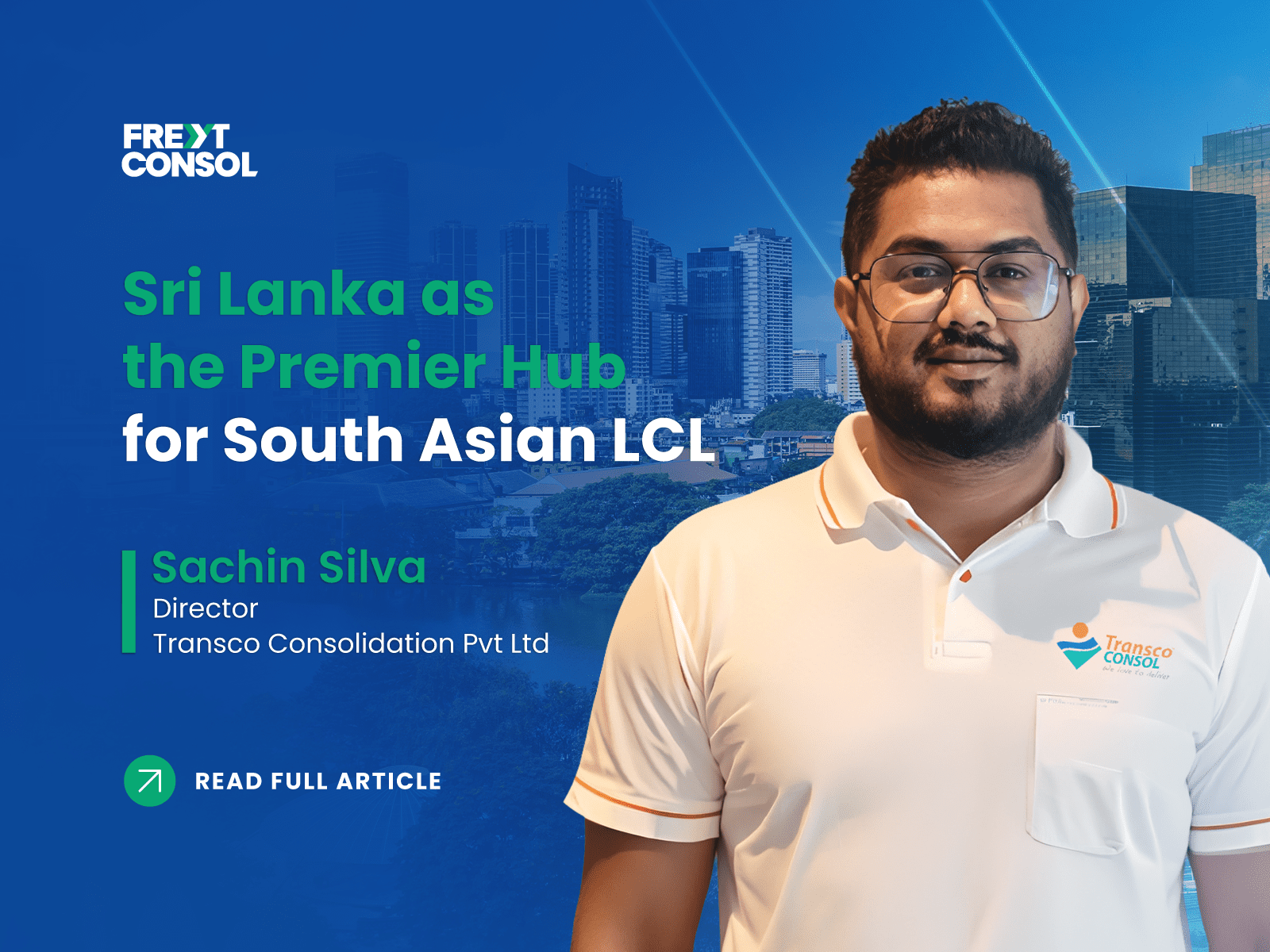
The Indian Ocean has long been the heartbeat of global trade, and at its center sits Sri Lanka. As we navigate the complexities of 2026, the island nation has solidified its role not just as a transit point, but as the indispensable gateway for Less than Container Load (LCL) consolidation in South Asia. For freight forwarders looking to optimize routes between the East and West, the Port of Colombo offers a strategic advantage that few other hubs can match.
At Transco Consolidation Pvt Ltd, we have witnessed firsthand the evolution of Colombo from a traditional transshipment port into a sophisticated, multi-modal logistics powerhouse.
“The strength of Sri Lanka lies in its agility. We aren't just moving boxes; we are providing the fluid connectivity that the modern supply chain demands, especially for LCL cargo that requires precision handling and rapid turnaround,” says Sachin, a veteran in the Sri Lankan logistics landscape.
The Strategic Edge of Colombo in 2026
The year 2025 saw the Port of Colombo shatter previous records, handling over 8.29 million TEUs. This 6% year-on-year growth is a testament to the port's resilience amidst global maritime volatility. As we move through 2026, several factors make Sri Lanka the preferred choice for LCL consolidation:
Proximity to the Indian Subcontinent
Colombo’s geographic location allows it to serve as a "relay station" for the massive Indian market. With major Indian ports often facing congestion or draft limitations for ultra-large container vessels (ULCVs), Colombo acts as the deep-water hub where cargo is consolidated and then fed into regional ports via an extensive feeder network.
Infrastructure Expansion
The completion of the East Container Terminal (ECT) and the progress on the West Container Terminal (WCT) have significantly boosted the port’s capacity. These developments are not just about more space; they are about specialized infrastructure for LCL operations, including state-of-the-art Container Freight Stations (CFS) that facilitate faster de-consolidation and re-export.
Navigating the LCL Landscape in Sri Lanka
LCL consolidation is an art of balance. It requires the ability to merge small shipments from various shippers into a single container while ensuring that documentation, customs, and physical handling remain seamless. In Sri Lanka, this process has become highly refined.
“In the LCL business, time is the ultimate currency. Our clients in the Freyt Consol network rely on us to ensure that their partial shipments don’t sit idle. By leveraging Colombo’s high frequency of vessel calls, we can offer weekly sailings to almost every major global destination,” Sachin explains.
Digital Transformation and Transparency
One of the most significant shifts in 2026 is the full-scale adoption of paperless clearing systems by Sri Lanka Customs. This digital leap has reduced cargo dwell times at warehouses significantly. For an LCL shipment, which inherently involves multiple owners and complex paperwork, this transparency is a game-changer.
“Digitalization has removed the ‘black box’ of South Asian logistics. Today, our partners can track their LCL cargo at the item level, providing their end customers with the same level of visibility they would expect from an FCL shipment,” notes Sachin.
Why Transco Consolidation is Your Key Partner
Choosing a partner in a hub as busy as Colombo requires more than just a presence; it requires deep-rooted expertise and a commitment to the "LCL-first" mentality. Transco Consolidation Pvt Ltd has built its reputation on being a specialist in this niche.
Multi-Modal Connectivity
Beyond sea freight, Sri Lanka’s air-sea transshipment capabilities are among the best in the region. For urgent LCL cargo originating in Southeast Asia or China, Transco can facilitate sea-to-air transfers through Bandaranaike International Airport, cutting transit times to Europe and North America by half.
Tailored Value-Added Services
In 2026, a freight forwarder's job doesn't end at the port. At our Colombo facilities, we offer:
- Customized Labeling and Re-packing: Essential for e-commerce and retail clients.
- Quality Inspections: Ensuring goods meet standards before they are consolidated for the long haul.
- Expert Customs Navigation: Handling the nuances of Sri Lankan trade regulations to avoid costly delays.
“We see ourselves as an extension of our members' teams. When a partner in the Freyt Consol network sends a shipment to us, they are trusting us with their reputation. We take that responsibility seriously by ensuring every LCL pallet is handled with the care of a full container,” says Sachin.
The Road Ahead for South Asian Logistics
As we look toward the remainder of 2026 and into 2027, the regional dynamics are shifting. The rise of "China Plus One" manufacturing strategies has increased the volume of raw materials and finished goods moving through South Asia. Sri Lanka is the natural beneficiary of this trend.
However, the industry also faces challenges, from fluctuating fuel costs to the ongoing need for decarbonization.
“Sustainability is no longer a buzzword; it’s a requirement. We are seeing more demand for ‘green’ logistics options. By optimizing our consolidation patterns, we reduce the carbon footprint per cubic meter of cargo, helping our partners meet their ESG goals,” Sachin adds.
Conclusion
Sri Lanka remains the crown jewel of the Indian Ocean trade route. With record-breaking port volumes, a rapidly digitalizing customs environment, and a strategic focus on LCL consolidation, the nation is perfectly positioned to support the global freight forwarding community.
For members of the Freyt Consol network, having a partner like Transco Consolidation Pvt Ltd in Colombo means more than just having a warehouse; it means having a strategic foothold in one of the world’s most vital logistics hubs.
“The future of freight is consolidated. In an era of uncertainty, the ability to move smaller volumes more frequently and with greater flexibility is what will define the winners in this industry. At Transco, we are ready to lead that charge from Colombo,” concludes Sachin.

Article written by
Freyt Consol is a global network for LCL consolidators and NVOCCs dedicated to excellence and long-term growth. We create an environment where members thrive by collaborating with trusted partners and accessing essential resources.
Read more Freyt Consol Blogs ⇲
- Sri Lanka as the Premier Hub for South Asian LCL
 Sri Lanka has cemented its position as the premier hub for South Asian LCL consolidation, with Colombo at the center of regional connectivity. Record container volumes, expanded terminal capacity, and full digital customs integration are strengthening its role as a relay gateway for the Indian Subcontinent. For forwarders moving East–West cargo, Colombo now offers the frequency, speed, and precision LCL operations demand.
 - Optimizing Global Trade via Indonesia Logistics Excellence
 Indonesia’s complex logistics landscape is being transformed through local expertise, LCL consolidation, and digital innovation. Featuring insights from Halim of PT. Bintang Samudra Indonusa (BS LINE), it shows how Freyt Consol partners help global businesses navigate Jakarta’s gateways, archipelago challenges, and evolving trade frameworks with confidence.
 - How Tanzania is Transforming Logistics
 Tanzania’s rise as a key logistics hub for East and Central Africa, driven by port modernization, rail infrastructure, and digitalization. Featuring insights from Rambabu Gurram of Allcargo Tanzania Limited, it highlights how local expertise and LCL consolidation are helping global businesses unlock the region’s growing trade potential.