

By Halim Sutrisno, Managing Director at PT. Bintang Samudra Indonusa (BS LINE)
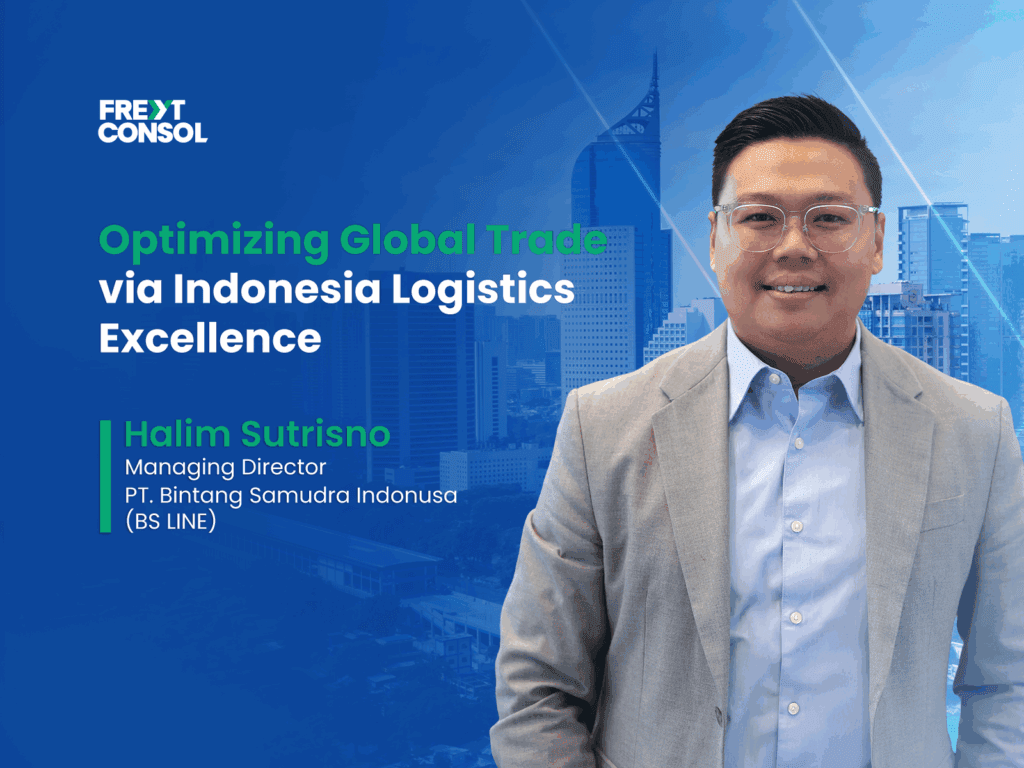
Indonesia stands as a beacon of economic potential in Southeast Asia. As the world’s largest archipelagic nation, its logistics landscape is as complex as it is rewarding. For global businesses, navigating the 17,000 islands of Indonesia requires more than just a map; it requires a strategic partner who understands the pulse of Jakarta’s ports and the intricacies of regional trade.
The Strategic Importance of the Indonesian Market
Indonesia is currently undergoing a massive economic transformation. With a population exceeding 270 million and a rapidly growing middle class, the demand for imported goods and the export of local commodities has never been higher. However, the geographical reality of the country presents a unique set of challenges for freight forwarders.
“Success in Indonesia is not just about moving cargo from point A to point B,” Halim explains. “It is about understanding the maritime DNA of our nation. Because we are an archipelago, every shipment involves a delicate balance of sea, land, and sometimes air connectivity to ensure efficiency.”
As a member of Freyt Consol, PT. Bintang Samudra Indonusa (BS LINE) serves as the critical link for global partners looking to tap into this vibrant market. By focusing on LCL (Less than Container Load) consolidation, the company provides a scalable solution for businesses that need flexibility without the high cost of full container loads.
Jakarta as the Central Gateway for Global Trade
Jakarta, specifically the Port of Tanjung Priok, serves as the primary engine of Indonesian commerce. Handling more than 50% of the country’s transshipment cargo, it is the heartbeat of the nation’s logistics sector. For Halim and his team at BS LINE, Jakarta is more than just a base; it is a strategic vantage point.
“Jakarta is the gateway through which the world meets Indonesia,” says Halim. “By basing our core operations here, we provide our Freyt Consol partners with immediate access to the country’s most advanced infrastructure and the most frequent sailing schedules in the region.”
The efficiency of Jakarta’s ports has improved significantly in recent years due to government-led initiatives like the National Logistics Ecosystem (NLE). This digitalization of the supply chain has reduced "dwell times" and streamlined customs clearance, making it easier for international companies to do business.
The Power of LCL Consolidation in Indonesia
For many SMEs and even large corporations, LCL consolidation is the most viable way to manage inventory in a volatile global economy. In Indonesia, where infrastructure quality can vary between islands, LCL offers a layer of protection and cost-management that FCL cannot always provide.
“We see LCL as the future of sustainable trade in Southeast Asia,” Halim notes. “It allows smaller players to compete on a global scale. At BS LINE, we specialize in gathering these smaller shipments and optimizing them into a single, efficient stream. This reduces overhead for our clients and ensures that even the smallest parcel receives premier handling.”
LCL consolidation also plays a vital role in the "just-in-time" manufacturing processes that are becoming popular in Indonesia’s industrial zones. By allowing for more frequent, smaller shipments, businesses can maintain leaner inventories and react faster to market shifts.
Overcoming the Challenges of Archipelago Logistics
Moving goods across an archipelago is a logistical puzzle. The "Last Mile" in Indonesia is often the most difficult part of the journey. While Jakarta has world-class facilities, reaching the outer islands requires deep local knowledge and a robust network of domestic feeders.
“The complexity of our geography means that experience is our most valuable asset,” Halim shares. “When a partner sends cargo to Indonesia, they aren't just buying space on a ship; they are buying our ability to navigate local regulations, port congestion, and the unique inter-island transit requirements that define our industry.”
BS LINE leverages its deep roots in the Indonesian market to provide seamless transshipment. Whether the cargo is destined for the industrial hubs of Surabaya or the resource-rich regions of Kalimantan, the expertise provided ensures that the transition from international waters to local distribution is flawless.
Digitalization and the Future of Indonesian Freight
The logistics industry in Indonesia is currently in the midst of a digital revolution. From blockchain-enabled tracking to automated warehouse management systems, technology is closing the gap between Southeast Asia and the rest of the world.
“We are investing heavily in digital transparency,” Halim emphasizes. “Our global partners expect real-time data. In the past, Indonesian logistics was seen as a 'black box' where cargo would enter and information would stop. Today, we are changing that. Through BS LINE and the Freyt Consol network, visibility is a standard, not a luxury.”
This shift toward digitalization is also helping to combat some of the traditional bureaucratic hurdles in the region. Electronic documentation and automated customs filing are reducing the margin for error and speeding up the movement of goods across borders.
Indonesia Role in the RCEP and Global Supply Chains
The Regional Comprehensive Economic Partnership (RCEP) has positioned Indonesia as a central player in the world’s largest free-trade bloc. This agreement has lowered tariffs and simplified rules of origin, making Indonesia an even more attractive destination for manufacturing and distribution.
“The RCEP is a game-changer for Indonesian freight forwarding,” says Halim. “It opens up new corridors of trade with China, Japan, Australia, and the ASEAN nations. As thought leaders in this space, we are helping our clients reorganize their supply chains to take full advantage of these new trade agreements.”
With Indonesia increasingly being viewed as an alternative to other traditional manufacturing hubs, the demand for sophisticated logistics services is skyrocketing. BS LINE is at the forefront of this shift, providing the localized expertise necessary to navigate this new era of global trade.
Sustainability in the Logistics Sector
As global awareness of environmental impact grows, the logistics industry in Indonesia is also looking toward greener solutions. While the maritime sector is traditionally carbon-intensive, innovations in route optimization and consolidation are helping to reduce the overall footprint of Indonesian trade.
“Sustainability is no longer an option; it is a responsibility,” Halim asserts. “By maximizing container utilization through LCL consolidation, we are inherently reducing the carbon cost per unit of cargo. It is one of the many ways we are looking toward the future of the industry.”
Through the Freyt Consol network, BS LINE is able to implement best practices from around the world, ensuring that Indonesian logistics remains competitive not just in price and speed, but also in environmental stewardship.
Why Local Expertise Matters for Global Partners
In the world of freight forwarding, a network is only as strong as its local members. The value of Freyt Consol lies in the ability to tap into the "on-the-ground" knowledge of experts like Halim. In a market as nuanced as Indonesia, this knowledge is the difference between a successful delivery and a costly delay.
“Our partnership with Freyt Consol is built on trust and shared expertise,” Halim concludes. “When a member from another part of the world reaches out to us, they know they are getting the most accurate, up-to-date information about the Indonesian market. We are their eyes and ears on the ground in Jakarta.”
For businesses looking to expand into Southeast Asia, the message is clear: Indonesia is open for business, and with the right partner, the complexities of the archipelago become opportunities for growth.
Navigating Regulatory Changes in 2025 and Beyond
Looking ahead, the Indonesian government continues to refine its maritime policies to strengthen its position as a "Global Maritime Fulcrum." This includes investments in "Sea Toll" roads and the expansion of deep-sea ports to accommodate larger vessels.
“The landscape is constantly evolving,” Halim notes. “Staying ahead of regulatory changes is a full-time job. Whether it’s new import quotas or changes in tax structures, we ensure our partners are never caught off guard. That is the essence of being a thought leader, anticipating change before it happens.”
This proactive approach allows PT. Bintang Samudra Indonusa to provide a level of service that goes beyond simple transportation. They act as consultants, helping international partners navigate the legal and operational hurdles that are unique to the Indonesian market.
Conclusion
The Indonesian logistics market is a land of immense opportunity, but it requires a specialized touch. Through the leadership of Halim and the operational excellence of PT. Bintang Samudra Indonusa (BS LINE), Freyt Consol members have a powerful ally in the heart of Jakarta.
As the country continues to modernize its infrastructure and deepen its integration into global supply chains, the importance of expert LCL consolidation will only grow. By choosing a partner who understands the archipelago, global businesses can ensure their cargo, and their reputation, is in the best possible hands.
With Jakarta as the anchor and BS LINE as the guide, the future of Indonesian trade looks brighter than ever. For those ready to explore the potential of this Southeast Asian giant, the path to success is paved with local expertise, digital innovation, and the collaborative strength of the Freyt Consol network.

Article written by
Freyt Consol is a global network for LCL consolidators and NVOCCs dedicated to excellence and long-term growth. We create an environment where members thrive by collaborating with trusted partners and accessing essential resources.
Read more Freyt Consol Blogs ⇲
- Optimizing Global Trade via Indonesia Logistics ExcellenceIndonesia’s complex logistics landscape is being transformed through local expertise, LCL consolidation, and digital innovation. Featuring insights from Halim of PT. Bintang Samudra Indonusa (BS LINE), it shows how Freyt Consol partners help global businesses navigate Jakarta’s gateways, archipelago challenges, and evolving trade frameworks with confidence.
- The Top 10 UK Goods Exports Powering Global Trade in 2025
 The top 10 UK goods exports powering global trade in 2025, from mechanical power generators to pharmaceuticals and aerospace. With expert commentary from Ray Palmer of Beckchoice, it highlights the complex logistics, compliance demands, and freight expertise required to move Britain’s highest-value exports worldwide.
 - Shipping from Japan? The 2024 Problem Explained
 Japan’s “2024 Problem” is reshaping domestic and international logistics, creating tighter trucking capacity, rising costs, and new risks for global shippers. Driven by strict overtime caps and an aging workforce, the disruption affects everything from factory pickups to port departures. With Osaka emerging as a strategic gateway, Tanaka of Famous Pacific Shipping explains how smart planning and LCL solutions can keep supply chains resilient in this changing landscape.